

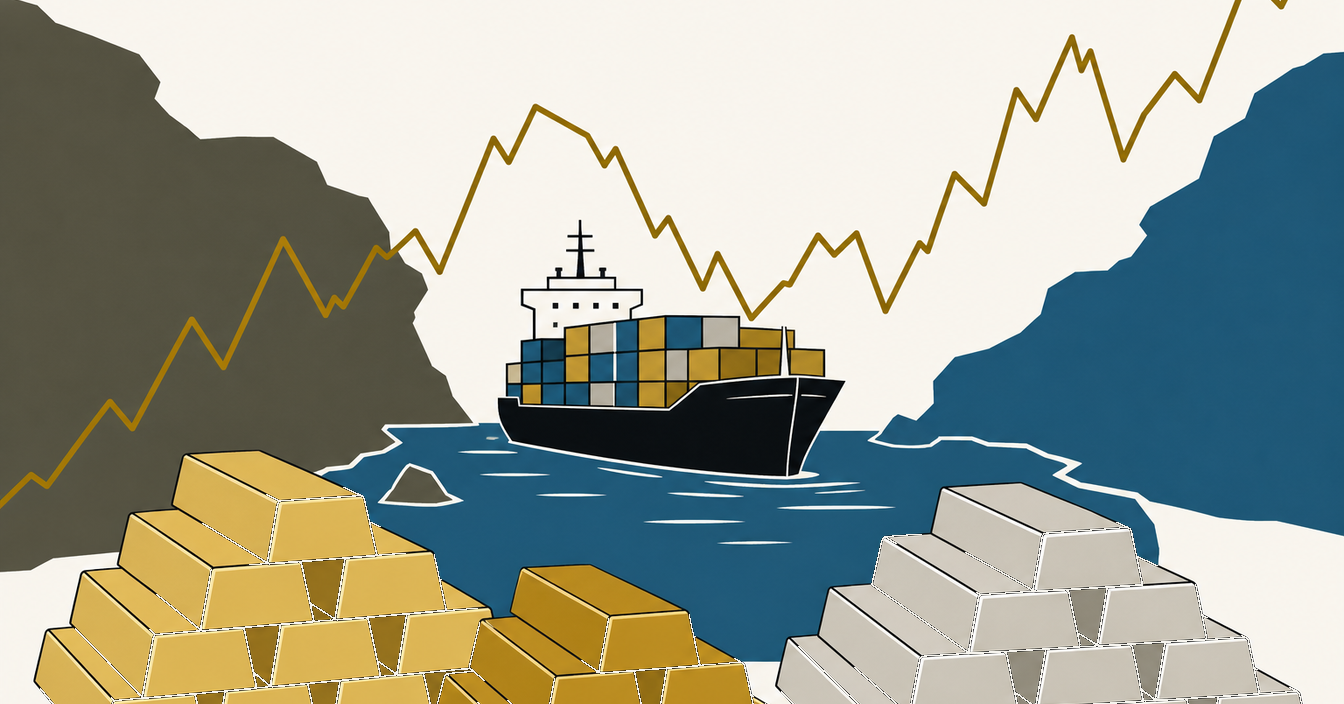
A reported attack on a cargo vessel near Oman prompted the UN’s maritime agency to temporarily pause escorted transits through the Strait of Hormuz, injecting new uncertainty into a key global energy chokepoint. Metals traders may watch the fallout through oil prices, inflation expectations, and broader risk sentiment that often feeds into gold and silver pricing.
A new security incident in the Strait of Hormuz is back on traders’ radar after the UN’s International Maritime Organization (IMO) said it would temporarily pause its operation designed to escort ships out of the Gulf.
The decision followed reports that a cargo vessel was struck near Oman while attempting to transit the strait. The IMO said the pause is intended to re-check that safety assurances remain in place for ships on its evacuation list and for traffic in the region more broadly. Officials and regional authorities offered differing accounts around the incident, underscoring the fragility of the post-conflict shipping environment.
For metals markets, the Strait of Hormuz matters less because of direct metal flows and more because it is a critical conduit for global oil and LNG. If security concerns tighten energy supply expectations or disrupt normal tanker movements, oil prices can become more volatile, which can feed into inflation narratives and interest-rate expectations. Those cross-currents often influence demand for precious metals as investors reassess macro and geopolitical risk.
Industrial metals can also react indirectly: higher energy costs can affect smelting economics, while heightened risk-off sentiment can weigh on growth-linked commodities even when the immediate trigger is geopolitical.
Why This News Matters
Disruptions or renewed insecurity around the Strait of Hormuz can lift energy-risk premiums, affect inflation expectations and risk sentiment, and influence USD/rates dynamics—all factors that market participants monitor closely for precious metals. It can also spill over into industrial metals via broader risk appetite and macro pricing.
Affected Metals
- GOLD: Geopolitical flare-ups and shipping-security risks can increase safe-haven demand and can also shift expectations for inflation, the U.S. dollar, and real yields—key macro inputs for gold pricing.
- SILVER: Silver often tracks gold during geopolitical risk events, but its industrial component can add two-way sensitivity if broader risk sentiment deteriorates.
- PLATINUM: Platinum can be influenced by broader risk sentiment and industrial-demand expectations; heightened geopolitical risk can raise volatility via macro channels even if fundamentals are unchanged.
- PALLADIUM: Palladium may react through the same risk-on/risk-off and macro-rate channels that influence other commodities, especially if auto-demand expectations are repriced.
Source: ABC News (reporting via Reuters)