

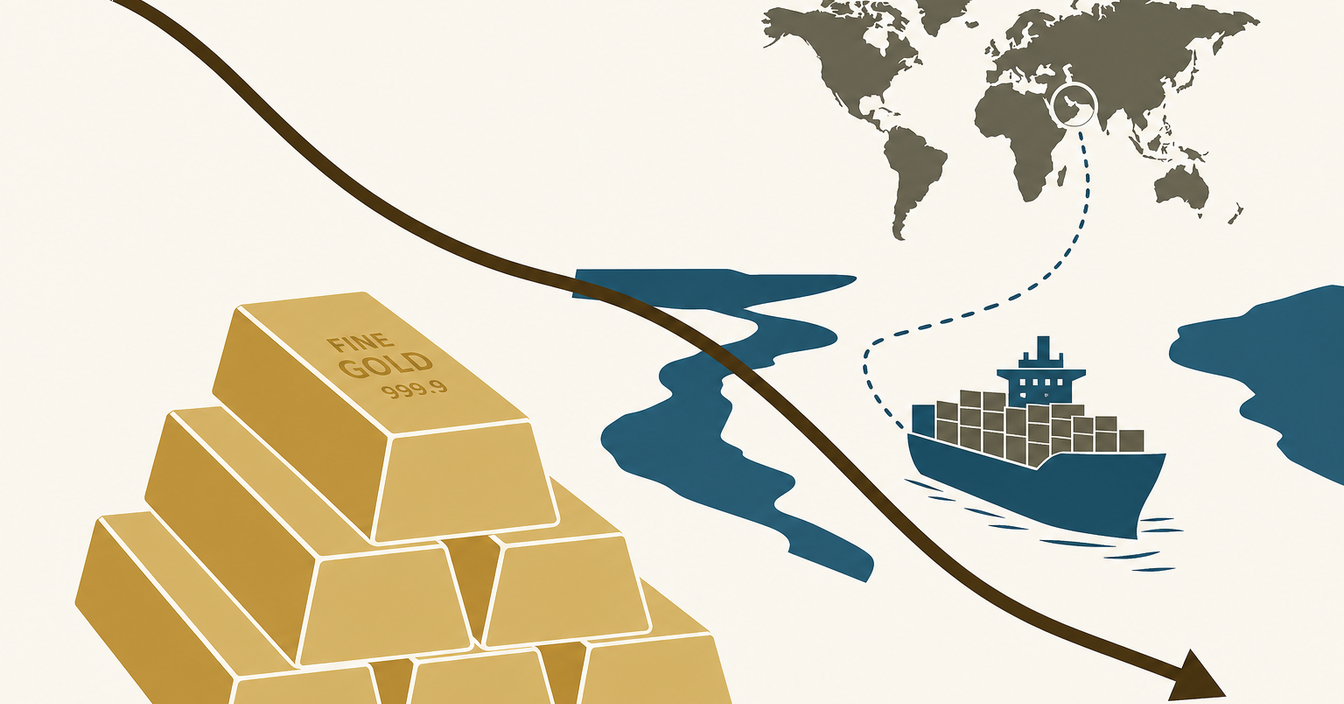
Gold prices faced downward pressure on Tuesday as emerging reports of diplomatic efforts in the Strait of Hormuz led to a sharp reversal in crude oil prices, altering the near-term inflation narrative for investors.
Precious metals markets experienced a shift in momentum during Tuesday's trading session. While gold often finds support when Treasury yields decline, the metal faced headwinds today as a primary driver of its recent strength—inflationary concerns linked to energy costs—showed signs of cooling. The catalyst for this shift was a series of reports suggesting renewed diplomatic discussions regarding the Strait of Hormuz, a critical maritime corridor for global oil supplies.
As news of potential U.S.-Iran negotiations circulated, crude oil prices surrendered their morning gains. This retreat in energy costs prompted market participants to recalibrate their expectations for near-term inflation. Because gold is frequently utilized as a hedge against rising prices, a perceived reduction in inflationary pressure can diminish its immediate appeal to some investors. Simultaneously, U.S. equities recovered from earlier lows, suggesting a slight increase in risk appetite that moved capital away from safe-haven assets.
Silver, however, showed greater resilience, managing to post modest gains even as gold drifted lower. Analysts note that while geopolitical de-escalation generally weighs on gold, silver's dual role as an industrial and investment asset can lead to divergent performance. Looking ahead, metals investors are likely to remain focused on whether these diplomatic efforts lead to a sustained decline in energy-driven inflation or if broader macroeconomic factors, such as central bank policy and sovereign debt concerns, will return to the forefront of market sentiment.
Why This News Matters
Changes in geopolitical tension in the Middle East often impact oil prices. Since oil is a major driver of inflation expectations, a drop in crude can reduce the demand for gold as an inflation hedge, even if Treasury yields are also declining.
Affected Metals
- GOLD: A decline in oil prices may reduce the incentive for gold purchases as an inflation hedge, potentially capping recent price gains.
- SILVER: While influenced by the same macro factors as gold, silver may see independent price action due to its industrial applications and shifting risk appetite in the equity markets.
Source: Kitco