


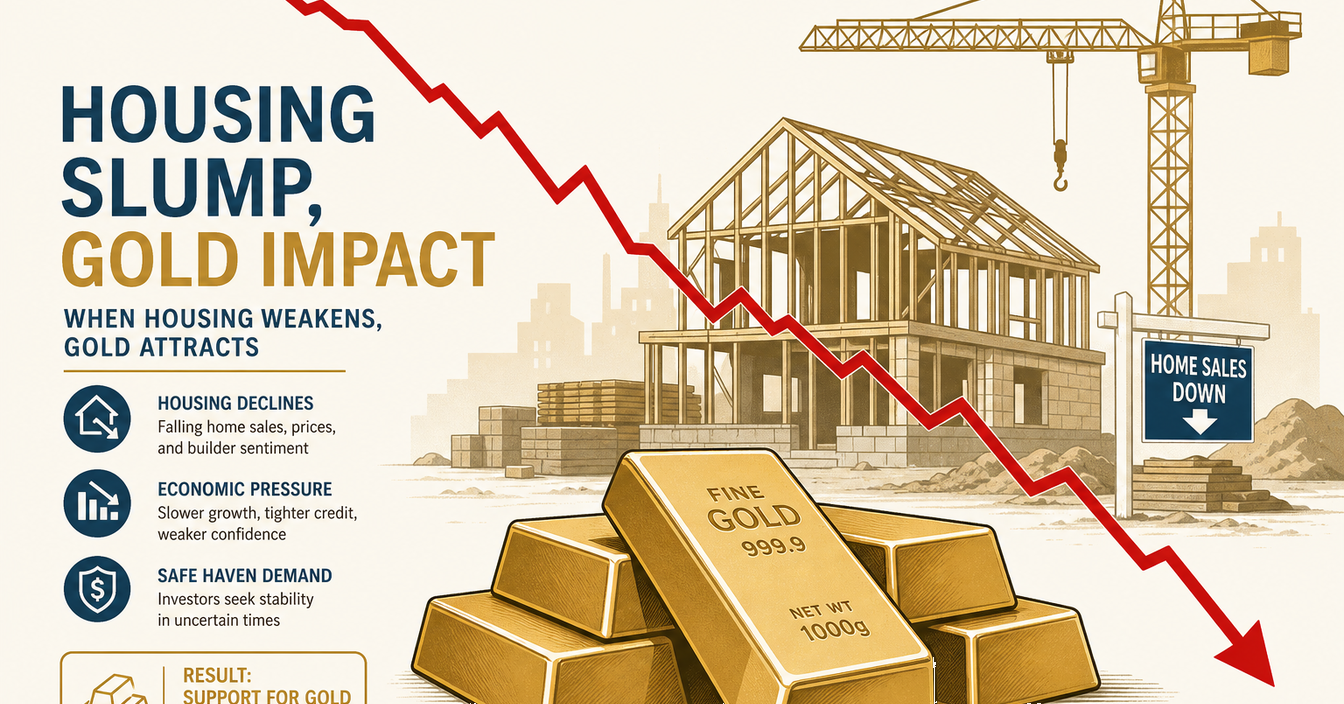
Fresh economic data showing a sharp decline in U.S. housing starts and building permits has weighed on gold prices today, as the metal tests session lows following the weaker-than-anticipated report from the Commerce Department.
Gold prices retreated toward their daily lows on Tuesday following the release of government data showing a significant downturn in the U.S. housing market for the month of September. According to the Department of Commerce, housing starts—a measure of new residential construction projects—plummeted by 5.2% last month. This brought the seasonally adjusted annual rate to 1.221 million units, falling short of the 1.300 million units market analysts had projected.
In addition to the drop in active construction, forward-looking indicators also showed signs of cooling. Building permits, which serve as a gauge for future construction activity, dipped by 0.2% to an annual rate of 1.400 million. While the permit data slightly exceeded consensus expectations of 1.390 million, the overall report painted a picture of a domestic housing sector struggling under the weight of persistent economic headwinds.
For precious metals investors, such data is a double-edged sword. Typically, signs of economic weakness can bolster gold’s appeal as a safe-haven asset or fuel expectations for a more dovish Federal Reserve policy. However, in the current market environment, where high energy costs and stubborn inflation have dominated the narrative, the weak housing figures appeared to add to a broader sense of market caution. As of Tuesday morning, spot gold remained under pressure, with market participants weighing these domestic economic signals against global inflationary trends and the upcoming Federal Reserve policy meeting.
Why This News Matters
Housing market data is a critical indicator of economic health and often influences Federal Reserve interest rate policy. Weaker-than-expected data can sometimes support gold by suggesting economic cooling, but in a high-inflation environment, it can also lead to complex market reactions where gold tracks other industrial or safety trends.
Affected Metals
- GOLD: Weaker economic data typically suggests a slowing economy, which can lead to lower interest rates, generally benefiting non-yielding assets like gold. However, today's reaction shows gold sliding as the market digests the data within a broader context of high inflation and firm bond yields.
Source: Kitco