

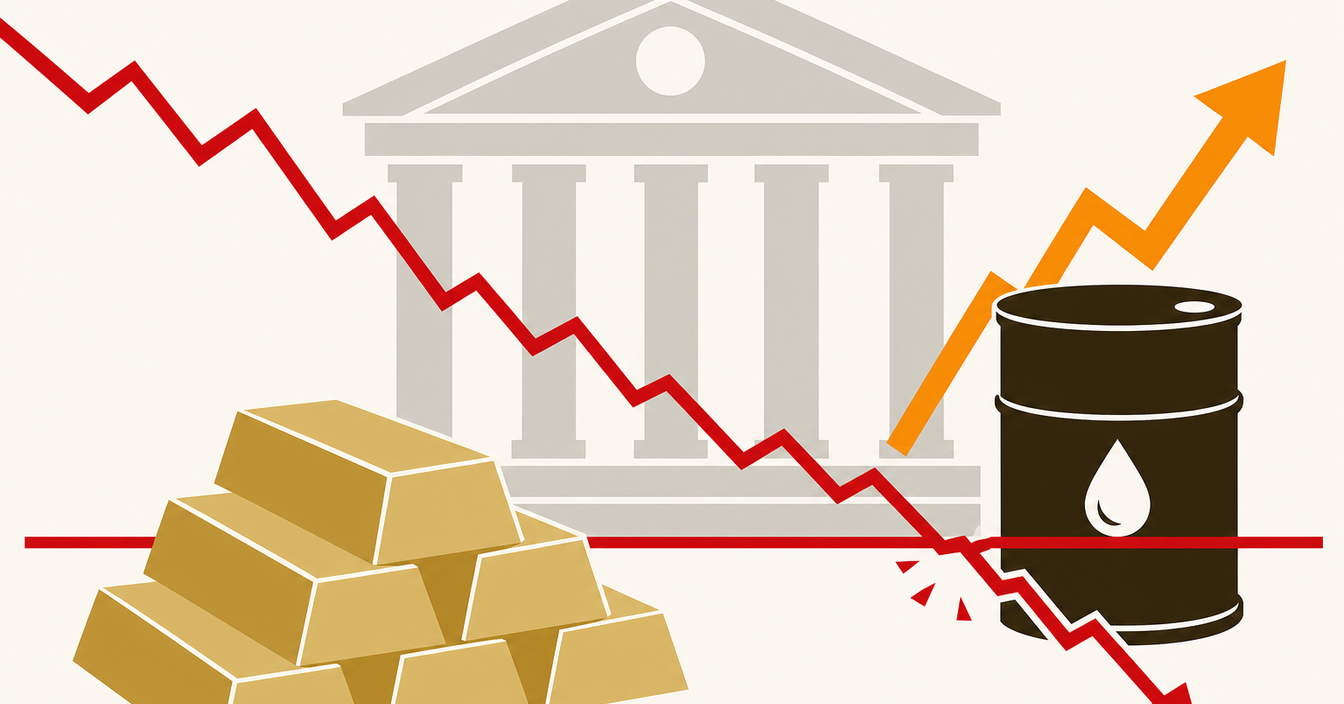
Gold prices fell below the critical $4,000 threshold on Friday, hitting three-month lows as a surge in crude oil prices fueled expectations for further Federal Reserve tightening.
Precious metals faced significant selling pressure during Friday's session, with gold breaching the psychologically significant $4,000 per ounce level for the first time since mid-July. This decline comes as the metals sector heads for its steepest weekly loss in months, driven by a volatile combination of geopolitical tensions and shifting monetary policy expectations.
The primary catalyst for the market move was a sharp rally in crude oil, which touched five-month highs following reports of intensified conflict in the Middle East. Increased hostilities near the Strait of Hormuz and strikes on Saudi energy infrastructure have stoked fears of a sustained energy-driven inflation spike. For precious metals investors, the concern is that persistent price pressures will prevent central banks from easing policy. According to the CME FedWatch Tool, market participants have significantly raised the probability of a December interest rate hike, with odds now exceeding 80%.
The impact was felt across the entire complex. Silver dropped to its lowest level in nearly a year, while platinum and palladium also saw notable declines as the U.S. dollar strengthened. Analysts noted that the downward move was further exacerbated by a liquidity squeeze in broader financial markets, as some investors sold liquid assets like gold to cover requirements following a sharp downturn in equity markets. As the Federal Reserve’s next policy meeting approaches on October 27-28, the focus remains on whether these inflationary pressures will force a more aggressive stance from policymakers, potentially keeping the cost of holding non-yielding assets elevated.
Why This News Matters
Gold falling below the psychological $4,000 level is a major technical event. The spike in oil prices to 5-month highs directly fuels inflation fears, which in turn raises expectations for higher-for-longer interest rates. Higher rates increase the opportunity cost of holding non-yielding precious metals, leading to the broad sell-off seen across gold, silver, platinum, and palladium.
Affected Metals
- GOLD: Prices fell below $4,000 as rising energy costs drove up expectations for a Federal Reserve rate hike in December, increasing the opportunity cost of holding the metal.
- SILVER: Silver hit a year-to-date low near $54, pressured by both the strong dollar and concerns that higher rates will hamper industrial and investment demand.
- PLATINUM: Platinum reached multi-month lows as the broader precious metals sell-off was compounded by a cautious outlook for global economic growth amid high energy prices.
- PALLADIUM: Palladium prices dropped toward $1,050, following the general trend of liquidation and the strengthening of the U.S. dollar against commodity-linked assets.
Source: Reuters / Kitco News