

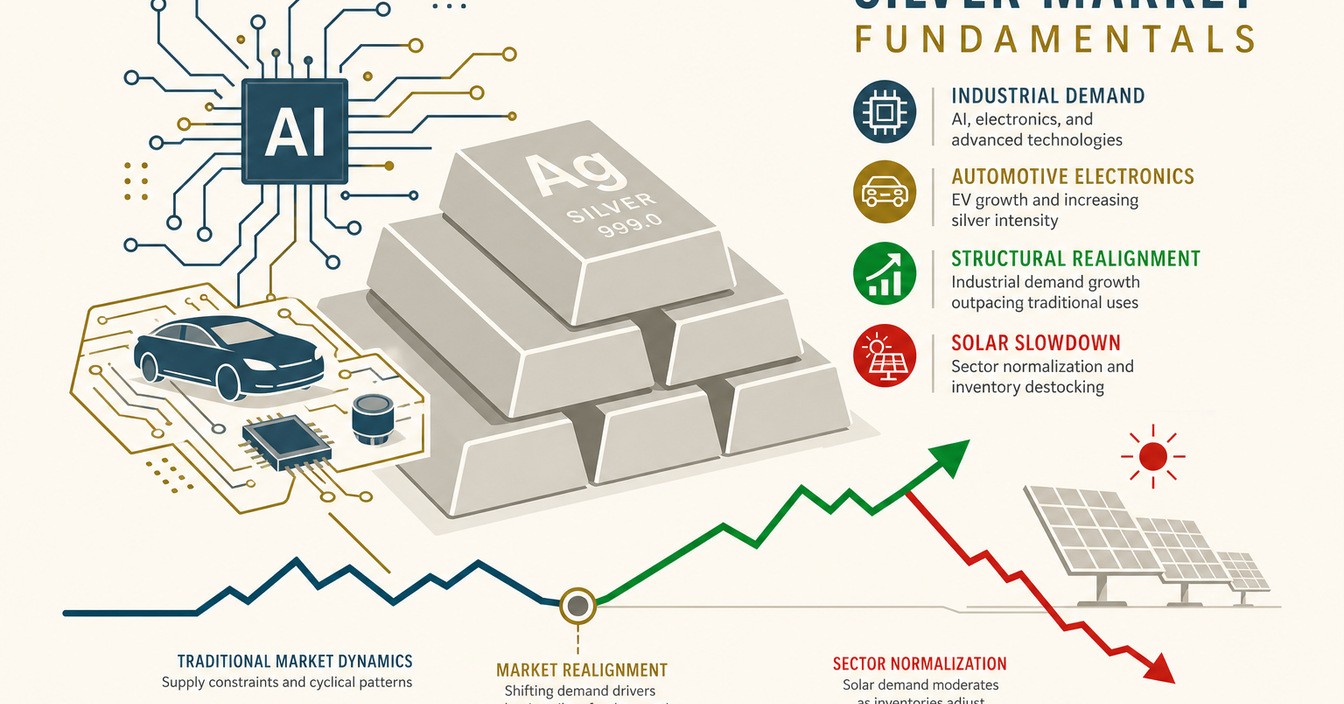
New analysis indicates that silver is entering a period of structural re-alignment, with aggressive growth in artificial intelligence and automotive electronics compensating for reduced usage in the solar sector. Despite recent price volatility driven by broader monetary policy, the metal faces a persistent supply deficit that could redefine its market value through 2027.
Recent market data reveals a significant shift in the industrial fundamentals for silver, as traditional demand drivers give way to emerging technologies. While the precious metal has faced downward pressure due to a strong U.S. dollar and restrictive central bank policies, a new report from UBS Global Wealth Management suggests that the internal dynamics of the silver market are becoming increasingly complex.
Industrial demand for silver is currently experiencing a notable divergence across different sectors. In the photovoltaic (solar) industry, high prices have accelerated 'thrifting'—a process where manufacturers reduce the amount of silver used in solar cells—leading to an estimated 2% contraction in that sector's total industrial fabrication for 2026. However, this decline is being largely offset by a 'secular growth' phase in other high-tech areas. Specifically, the expansion of data centers, artificial intelligence (AI) hardware, and the increasing electronic complexity of modern vehicles are creating new, robust demand channels.
According to market strategists, silver continues to exhibit higher volatility than gold, often reacting more sharply to changes in real interest rates. Despite this 'higher-beta' behavior, the underlying physical market remains in a structural deficit. Analysts suggest that if supply constraints persist, the metal could see significant price appreciation over the next 24 months, with some internal projections targeting levels as high as $80 per ounce by late 2027. Investors are currently monitoring how these industrial shifts will balance against macroeconomic headwinds, particularly as the market anticipates the next moves from global central banks.
Why This News Matters
The report highlights a significant structural shift in silver demand, where growth in AI infrastructure and automotive electronics is beginning to decouple from solar 'thrifting.' This fundamental change, combined with a persistent supply deficit, provides a new macroeconomic framework for silver pricing independent of gold's movement.
Affected Metals
- SILVER: The metal may see long-term support from structural supply deficits and new demand from AI and automotive sectors, even if high interest rates cause short-term volatility.
- GOLD: Silver often tracks gold as a 'higher-beta' alternative; strength in silver's industrial fundamentals can sometimes provide a floor for the broader precious metals complex.
Source: Investing.com