

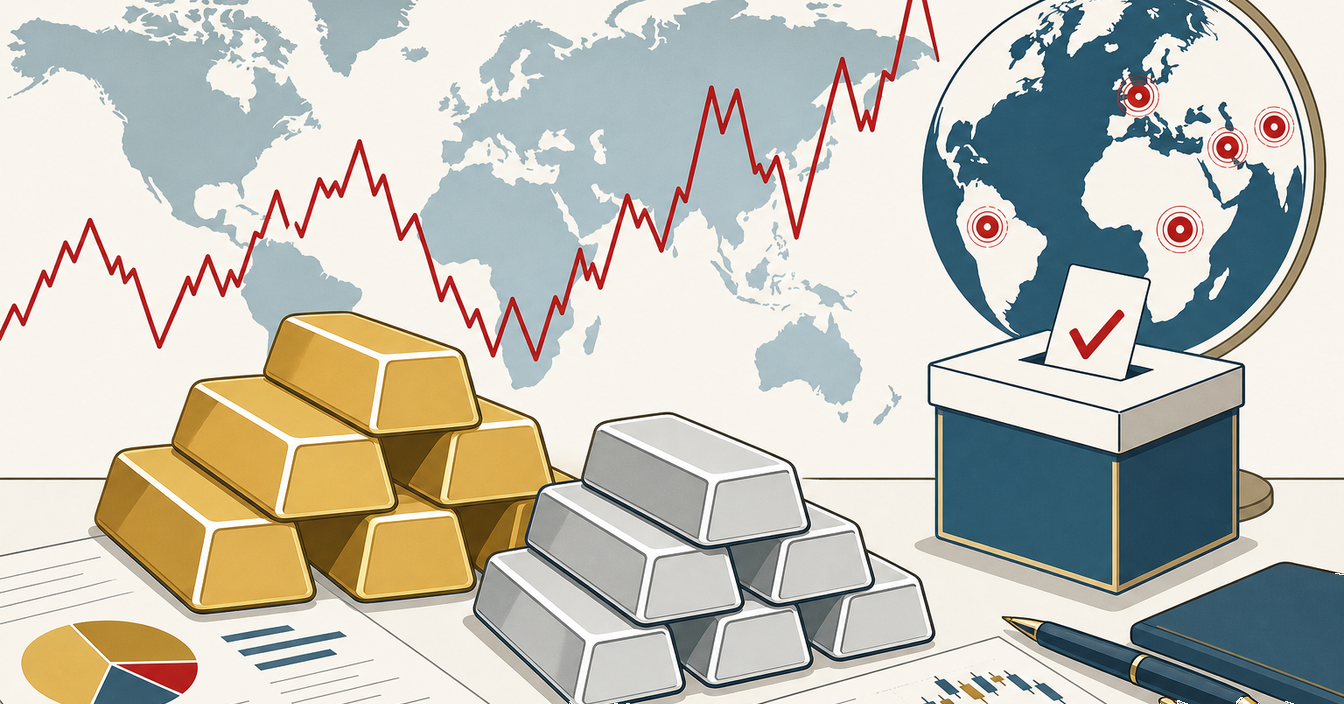
Precious metals faced significant pressure on Tuesday as a flare-up in Middle Eastern conflict and the start of US midterm elections prompted investors to recalibrate their expectations for inflation and interest rates.
Gold and silver prices declined on Tuesday, November 3, as market participants balanced safe-haven instincts against rising energy costs and political uncertainty. A report of military action involving Iran's Qeshm Island caused a rebound in crude oil prices, which had previously seen a sharp selloff. For the precious metals market, higher oil prices often translate to heightened inflation concerns, which in turn lead to expectations that the Federal Reserve may maintain a more restrictive monetary policy for longer. Higher interest rates typically increase the opportunity cost for investors holding assets like gold and silver that do not produce a yield.
The volatility coincided with the US midterm elections, as voters determined the future control of Congress. Market analysts suggest that different election outcomes could have varying impacts on fiscal policy and the regulatory environment for major industries, including the technology sector. Some observers noted that if equity markets face pressure due to political shifts, investors might liquidate gold positions to cover losses in other parts of their portfolios.
In addition to macroeconomic factors, the World Gold Council released its latest demand trends report. The organization revised its 2026 investment demand forecast downward, citing a slower-than-expected appetite for physical bars and coins. However, this was partially offset by continued strength in central bank acquisitions. By midday in New York, spot gold and silver had both moved lower, while platinum and palladium followed suit as industrial and investment sentiment remained cautious amid the day's geopolitical and electoral developments.
Why This News Matters
The combination of geopolitical escalation in the Middle East and the US midterm elections creates a complex environment for precious metals. While war usually drives safe-haven demand, the resulting energy price spike has intensified inflation fears and boosted expectations for more aggressive Federal Reserve rate hikes, which historically puts downward pressure on non-yielding metals like gold.
Affected Metals
- GOLD: Increasing interest rate expectations due to energy-driven inflation fears may weigh on prices despite geopolitical risks.
- SILVER: Silver often tracks gold's movement but may experience higher volatility due to its sensitivity to both industrial outlooks and monetary policy.
- PLATINUM: Downside pressure from broader metals selloff and concerns over the global economic growth outlook.
- PALLADIUM: Followed the general downward trend in precious metals, falling over 3% as sentiment shifted toward higher-for-longer rates.
Source: Reuters / Kitco News