

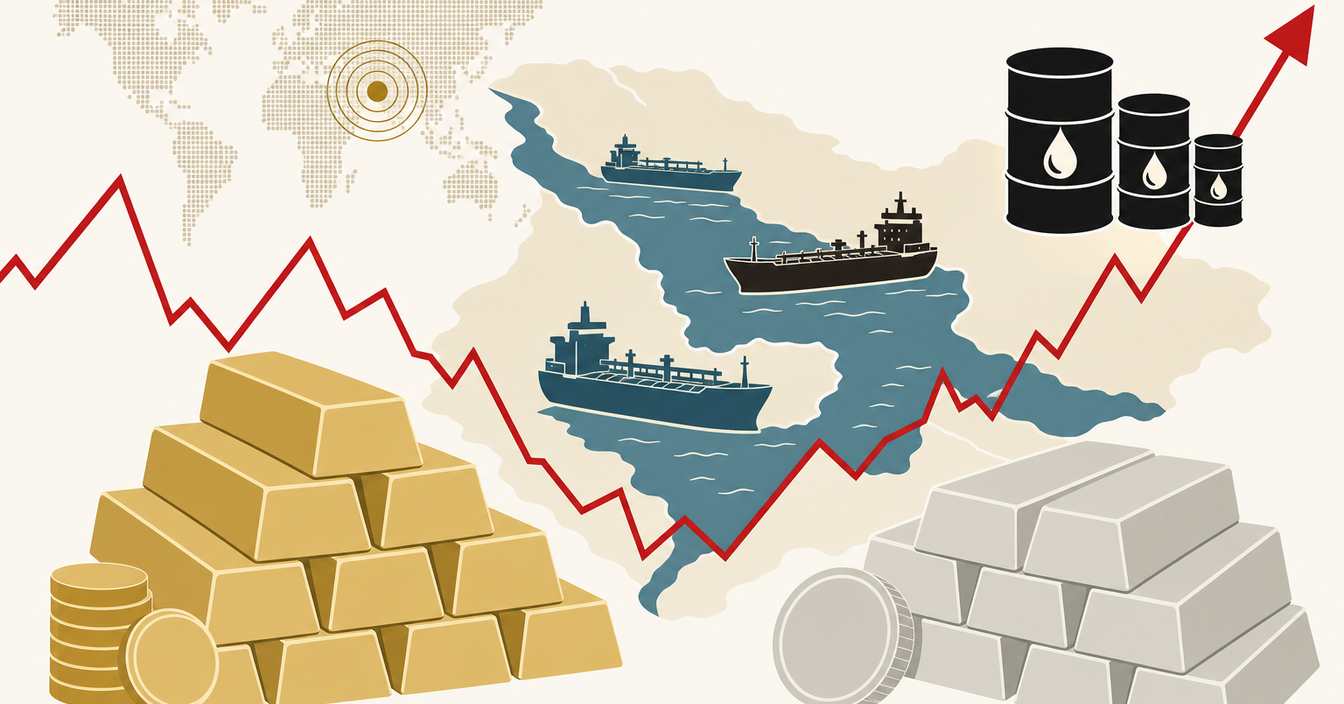
A sudden escalation of military activity in the Strait of Hormuz has sent oil prices surging, creating a complex environment for gold and silver as investors weigh geopolitical risks against the potential for more aggressive central bank action.
Precious metals are experiencing a volatile start to the final trading day of August as a sharp escalation in military tensions in the Middle East ripples through global markets. Reports of a U.S. engagement with Iranian forces on an island in the Strait of Hormuz, followed by retaliatory measures from Tehran, triggered a jump in Brent crude prices to over $92 per barrel on Monday.
For the gold market, this development presents a dual-edged sword. While gold typically attracts safe-haven interest during periods of heightened geopolitical strife, the resulting 3% surge in oil prices has fueled concerns about persistent global inflation. These inflationary pressures are reinforcing expectations that the Federal Reserve and other major central banks may maintain a more aggressive stance on interest rates. Market participants have significantly adjusted their outlook, with the probability of a September rate hike now estimated at approximately 60%, a sharp increase from late last week.
Despite the immediate pressure from a firmer U.S. dollar and rising bond yields, gold remains on track to conclude August with its strongest monthly performance since the beginning of the year. Silver, which has also seen substantial gains throughout the month, traded near $67 per ounce on Monday as industrial demand and safe-haven flows continue to interact. Investors are now closely monitoring upcoming U.S. labor data, which may provide further clarity on how the Federal Reserve will balance these new geopolitical risks against its primary mandate of price stability.
Why This News Matters
Renewed military conflict in the Strait of Hormuz has triggered a 3% surge in oil prices, which complicates the inflation outlook. This geopolitical instability, combined with hawkish central bank expectations, is creating a push-pull effect where gold's safe-haven status is balanced against the rising opportunity cost of higher interest rates.
Affected Metals
- GOLD: The conflict provides safe-haven support, but the resulting oil-driven inflation may lead to higher interest rates, which typically weighs on non-yielding gold.
- SILVER: Silver often follows gold's safe-haven lead but is also sensitive to the broader economic implications of rising energy costs on industrial production.
Source: Reuters / Kitco News