

Gold and silver prices staged a recovery on Wednesday after a series of U.S. economic updates suggested a cooling labor market and modest growth, prompting a slight decrease in aggressive interest rate expectations.
Precious metals markets experienced a volatile but ultimately positive turnaround on Wednesday as new economic data provided a reprieve from recent selling pressure. Gold and silver, which had been reeling from rising Treasury yields and a robust U.S. dollar, found support following the release of the ADP National Employment Report and the Federal Reserve’s latest Beige Book.
The ADP report indicated that private sector job creation slowed to 38,000 in August, falling notably below market expectations. This was supplemented by the Federal Reserve’s Beige Book, a summary of regional economic conditions, which characterized U.S. growth as modest with only slight gains in employment and moderate price increases. Together, these reports tempered the prevailing narrative of an overheated economy that would require immediate and aggressive interest rate hikes.
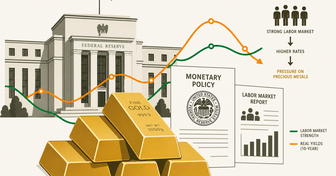
In response to the data, the 10-year Treasury yield retreated from its recent highs, dipping back toward the 4.79% level after earlier threatening to break higher. Since precious metals are non-yielding assets, they typically become more attractive to investors when bond yields decline. Market participants noted that while the probability of a September rate hike remains high, the 'hawkish edge' of the trade was softened, triggering a wave of short-covering in the metals complex.
Spot gold climbed back toward the $4,380 range, while silver saw a more pronounced percentage gain, reclaiming ground above $65.00. Despite the intraday bounce, analysts remain cautious, noting that the broader technical trend for metals remains challenged by high energy costs and a generally restrictive monetary environment. Investors are now shifting their focus to the upcoming government nonfarm payrolls report on Friday, which is expected to provide the definitive signal for the Federal Reserve’s next policy move.
Why This News Matters
The combination of weaker private payroll growth and the Fed's Beige Book findings led to a pullback in Treasury yields. Because gold and silver do not pay interest, lower yields reduce the opportunity cost of holding them, sparking a relief rally after recent sessions of heavy selling.
Affected Metals
- GOLD: Gold prices rose as the decline in Treasury yields made the non-yielding metal more competitive against interest-bearing assets.
- SILVER: Silver benefited from the same macroeconomic relief as gold but saw higher volatility, reclaiming key psychological levels as the dollar's momentum slowed.
Source: Kitco