

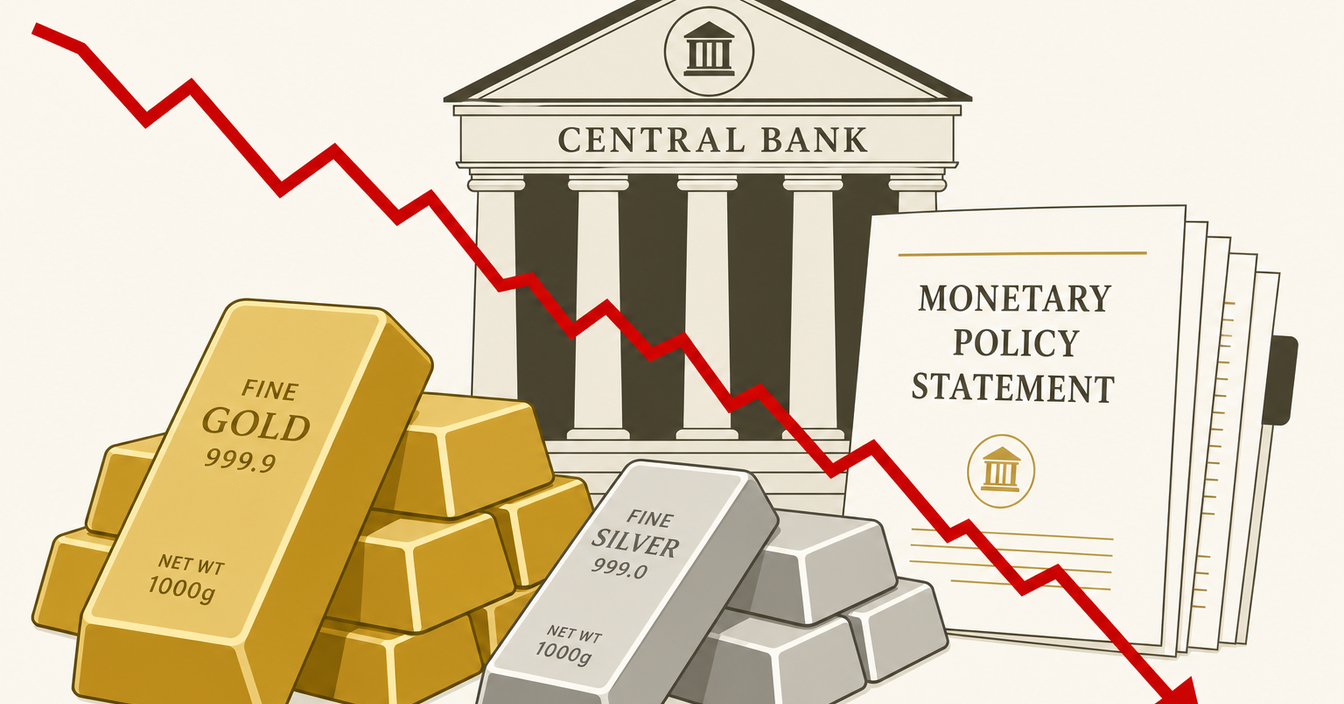
Gold and other precious metals declined on Friday after the release of the September Personal Consumption Expenditures (PCE) price index showed a significant monthly acceleration, fueling market expectations for a Federal Reserve interest rate hike before the year concludes.
Precious metals markets experienced a broad retreat on Friday following the release of critical U.S. inflation data. The September Personal Consumption Expenditures (PCE) price index, which the Federal Reserve prioritizes for its monetary policy assessments, rose by 0.5% during the month. This represented the sharpest monthly increase since March and signaled that price pressures remain persistent within the American economy.
The data has shifted market sentiment, as investors increasingly anticipate that the central bank may need to implement another interest rate hike before the end of the year to curb rising costs. In response, gold prices slid below the psychologically significant $4,000-an-ounce level, marking a continued decline for the month of October. Silver, platinum, and palladium also recorded notable losses as the prospect of higher-for-longer interest rates dampened the appeal of assets that do not provide a yield.
Market participants are also weighing the impact of elevated energy costs, driven by ongoing geopolitical tensions in the Middle East, which contribute to the broader inflationary environment. While geopolitical instability often provides a safe-haven bid for gold, the immediate pressure from rising bond yields and a firm monetary outlook appears to be the primary driver for today's price action. As the Federal Reserve continues to monitor incoming economic data, the path for precious metals will likely remain sensitive to shifts in interest rate expectations and the relative strength of the U.S. dollar.
Why This News Matters
The PCE price index is the Federal Reserve's preferred inflation gauge. A higher-than-expected reading increases the likelihood of further interest rate hikes, which raises the opportunity cost of holding non-yielding precious metals, typically putting downward pressure on their prices.
Affected Metals
- GOLD: Rising inflation data increases the probability of rate hikes, which historically weighs on gold prices by making interest-bearing assets more attractive.
- SILVER: Silver often follows gold's lead in a high-rate environment, but its industrial component may also be sensitive to the broader economic cooling that higher rates aim to achieve.
- PLATINUM: As an industrial and investment metal, platinum faced selling pressure alongside the broader complex as the PCE data bolstered the case for tighter monetary conditions.
- PALLADIUM: Palladium prices declined as the hawkish inflation report reduced investor appetite for the metal amidst wider commodity market liquidations.
Source: Investing.com