

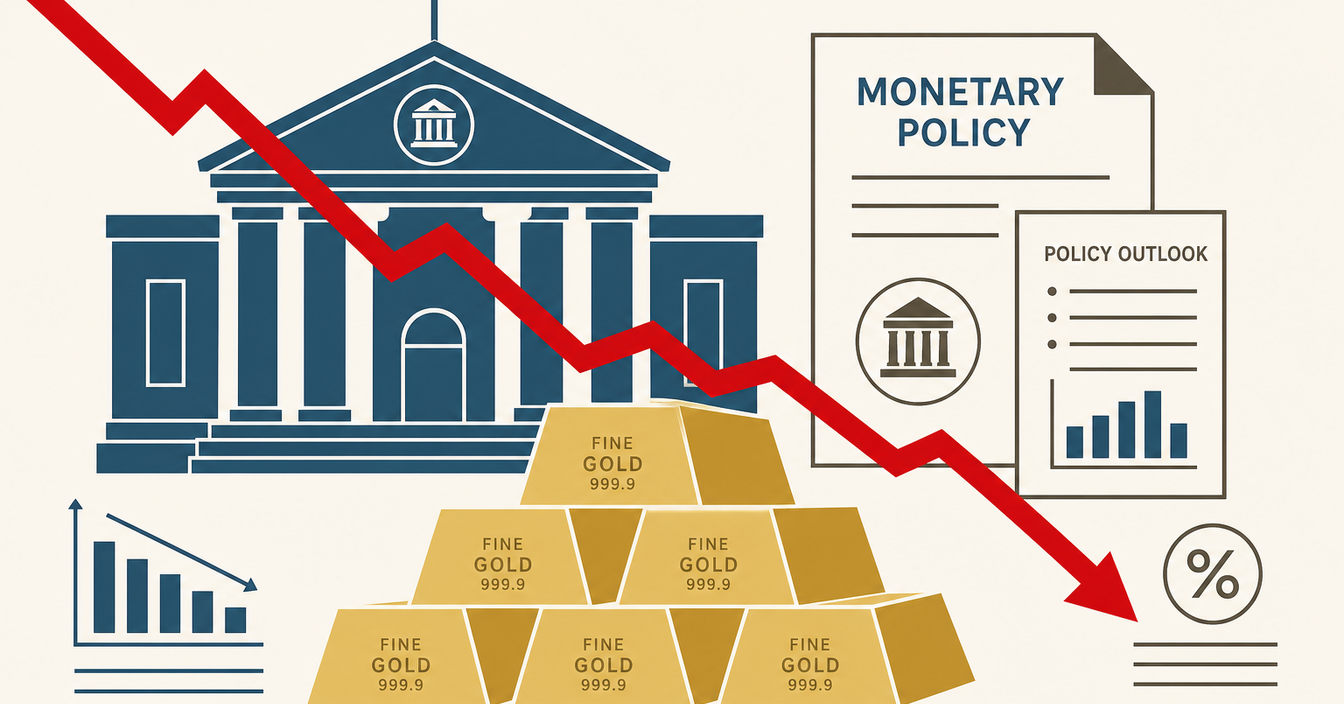
Gold and other precious metals faced renewed selling pressure on Wednesday as higher-than-expected U.S. inflation data reinforced the likelihood of a more aggressive interest rate path from the Federal Reserve.
Precious metals markets experienced significant volatility on Wednesday following the release of U.S. consumer price data that exceeded economist expectations. While gold initially attempted a recovery from Tuesday’s losses, the momentum faded as market participants digested the implications of persistent inflationary pressures on future monetary policy.
The U.S. Bureau of Labor Statistics reported that the Consumer Price Index (CPI) rose 0.4% in October, surpassing the 0.3% increase projected by analysts. Core inflation, which excludes volatile food and energy costs, also remained stubbornly high. This data has led many investors to conclude that the Federal Reserve may need to maintain a more restrictive stance for longer than previously anticipated. According to market trackers, the probability of a significant interest rate increase at the central bank's December meeting has risen sharply in response to the report.
Adding to the headwind for metals was a surge in the U.S. dollar and Treasury yields. Since precious metals like gold and silver do not provide a yield or dividend, they often face selling pressure when interest rates rise and the dollar strengthens. Federal Reserve officials, including Governor Christopher Waller, have recently suggested that robust inflation figures could necessitate larger rate adjustments to maintain central bank credibility.
While industrial demand and geopolitical concerns in the Middle East provided some underlying support for silver and palladium, the broader precious metals complex remains sensitive to the shifting macroeconomic landscape. Investors are now looking ahead to upcoming producer price data and further central bank commentary for clearer signals on the trajectory of borrowing costs heading into 2027.
Why This News Matters
Inflation data is a primary driver of Federal Reserve policy. The hotter-than-expected CPI reading has shifted market expectations toward more aggressive interest rate hikes, which increases the opportunity cost of holding non-yielding precious metals and strengthens the U.S. dollar.
Affected Metals
- GOLD: Rising interest rates increase the opportunity cost of holding gold, which typically weighs on prices.
- SILVER: Silver often follows gold's macro direction but may see higher volatility due to its dual role as an industrial metal.
- PLATINUM: Platinum prices may face pressure from a stronger dollar, though industrial demand factors can provide a cushion.
- PALLADIUM: Palladium is sensitive to broader economic health and interest rate cycles that affect automotive and industrial investment.
Source: MINING.COM